Trying to choose between a Baltimore City rowhouse and a condo? You are not alone. Many buyers love the charm and location options in Baltimore, but the day-to-day reality of each property type can feel very different. If you are weighing maintenance, fees, privacy, outdoor space, and resale considerations, this guide will help you sort through the tradeoffs and decide what fits your life best. Let’s dive in.
Why this choice matters in Baltimore
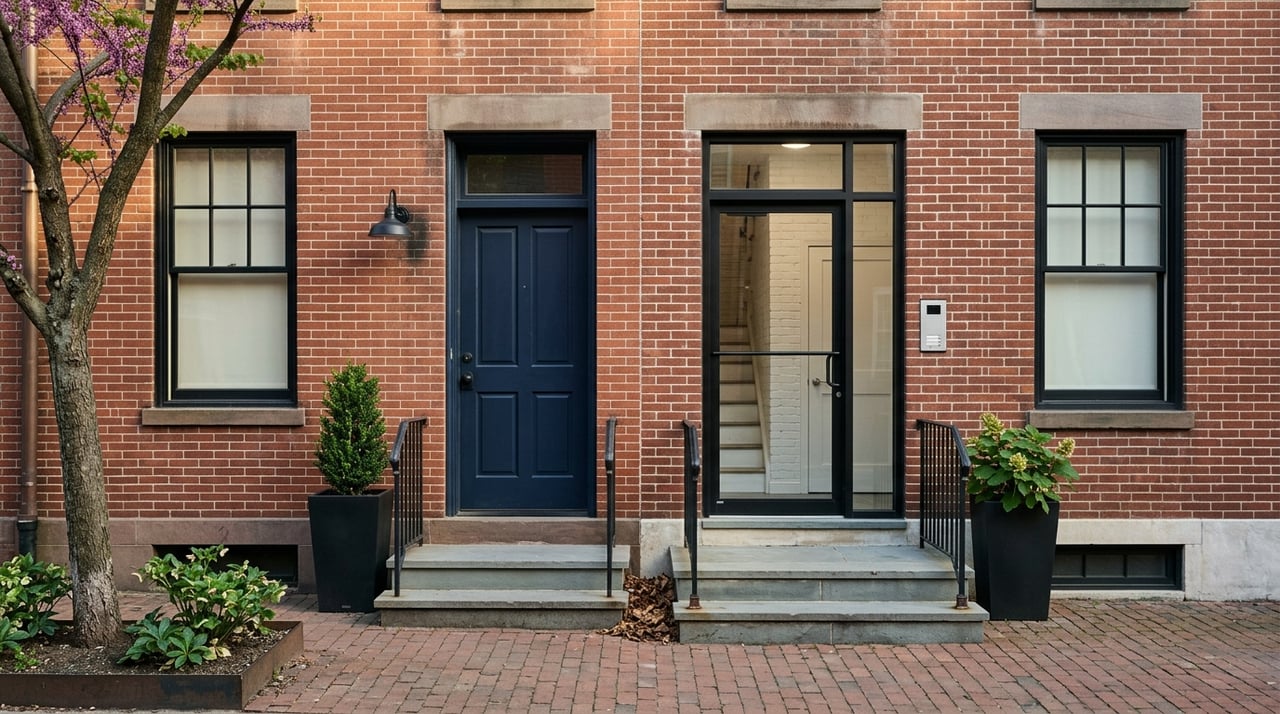
In Baltimore, attached housing is part of the city’s identity. The city’s planning materials describe rowhouses as a core local housing type, valued for efficient use of space, energy efficiency, and the way they shape block-by-block streetscapes. You can see that in many neighborhoods where continuous rows of homes sit close to the street with stoops, porches, or small front yards, as outlined in Baltimore’s planning materials.
At the same time, condos give buyers another way to enjoy city living with a different ownership and maintenance structure. In some Baltimore neighborhoods, you may find both options side by side, which makes it easier to compare based on your budget, goals, and lifestyle rather than location alone.
What you own in a rowhouse
A Baltimore rowhouse is generally an attached home with its own entrance and one or more shared walls. Under Baltimore City code, a rowhouse is part of a group of three or more buildings, each with a single dwelling unit, a private entrance, and a shared wall.
For you as a buyer, that usually means more direct ownership and more direct control. It also means more responsibility. Baltimore’s property maintenance code places responsibility for structures and exterior property areas on the owner or operator of the premises, so upkeep is usually more squarely on your shoulders.
What you own in a condo
A condo works differently. Under the Maryland Condominium Act, your unit is a defined three-dimensional space, while common elements include everything in the condominium that is not part of an individual unit.
That split matters. The council of unit owners is generally responsible for common elements, while you are typically responsible for your own unit unless the governing documents say otherwise. You may be able to make interior improvements, but changes that affect the structure, mechanical systems, common elements, or exterior appearance usually require approval.
Maintenance: hands-on or handled for you
Rowhouse maintenance
If you buy a rowhouse, you are usually taking on more of the exterior and site maintenance yourself. That can include roof concerns, masonry issues, steps, railings, porches, and any private outdoor area attached to the property.
For some buyers, that is a plus because it gives you more independence. If you like the idea of making your own decisions about repairs and improvements, a rowhouse may feel more flexible.
Condo maintenance
A condo often appeals to buyers who want fewer exterior chores. Maryland guidance explains that condo associations handle common elements, budgets, and reserves, and owners pay assessments for common expenses and reserve funding. You can also review annual budget and reserve information, according to Maryland condo guidance.
That convenience comes with structure. You will likely have monthly fees, and those fees support building operations, maintenance, and reserves. If you prefer a lower-maintenance setup, that tradeoff may be worth it.
Fees and financial planning
One of the biggest practical differences is predictable monthly cost versus variable maintenance cost.
With a condo, you should expect assessments. Those help cover shared expenses and reserves, and unpaid assessments can lead to lien enforcement under Maryland guidance. Before you buy, it is smart to review the association’s budget, reserve planning, and rules carefully.
With a rowhouse, you may not have condo fees, but that does not mean costs disappear. Instead, repair and maintenance expenses are usually more direct and less pooled. If a major item needs work, you are typically handling it as the owner.
Privacy and daily living
Privacy often feels different in these two setups. A rowhouse usually offers more separation than a condo because you typically do not have neighbors above or below you, even though you still share at least one wall.
In a condo, your layout may mean neighbors next to you, above you, below you, or some combination of all three depending on the building. That does not make one option better than the other, but it is an important part of everyday comfort.
Outdoor space and flexibility
Rowhouse outdoor space
Many buyers are drawn to rowhouses because they may offer features like stoops, porches, or small yards. Baltimore zoning standards for some rowhouse districts emphasize open front yards, stoops, and porches, which can shape the look and feel of a block, as noted in city zoning standards.
That said, not every rowhouse comes with a yard. Some have only a small exterior area, and some have very limited outdoor space. If private outdoor space matters to you, it is worth comparing individual properties rather than assuming all rowhouses offer the same setup.
Condo outdoor space
A condo can also include outdoor space, but the ownership details matter. Under Maryland law, a balcony, patio, rooftop area, or similar feature may be designated as a limited common element in the condo declaration. That means you may have exclusive use, but it is not always owned the same way as the interior of your unit.
If outdoor access is on your must-have list, ask how that space is classified and what maintenance or alteration rules apply.
Changes and customization
If you want more freedom to change the property over time, a rowhouse often gives you a more direct path, subject to applicable local rules and property condition.
A condo is usually more restrictive when it comes to visible changes. Maryland guidance says owners generally may not alter common elements or the exterior appearance of a unit without permission from the council of unit owners. So if you value easy approval-free updates on exterior features, a condo may feel limiting.
Resale: what buyers notice later
Resale is not just about the home itself. It is also about what future buyers will evaluate.
For condos, buyers often look closely at the association. Maryland requires delivery of certain documents before closing, including the declaration, bylaws, rules or regulations, and a certificate with required information. That means future resale can be shaped by the association’s financial health, reserve planning, and rule structure as much as by the condition of your unit.
For rowhouses, resale tends to depend more heavily on the house condition, block character, and neighborhood setting. Baltimore’s planning materials note that the city’s historic housing is a competitive advantage, and many rowhouse neighborhoods are valued for intact streetscapes, brick facades, and period details.
Baltimore neighborhoods where you can compare both
If you want to compare rowhouses and condos in real time, a few Baltimore neighborhoods are especially useful.
Federal Hill
Federal Hill offers a mix of condo and rowhome inventory, along with newer townhome options. That makes it a practical place to compare lower-maintenance living with attached-house ownership. Live Baltimore reports a 2025 median sale price of $355,000.
Canton
Canton includes condominiums, rowhomes, and apartment buildings. You can find everything from traditional rowhouses to waterfront condos, which makes the neighborhood a strong example of Baltimore’s housing variety. Its 2025 median sale price is $385,000.
Mount Vernon
Mount Vernon includes Victorian rowhomes, carriage houses, condos, apartments, and high-rises. If you want an urban-core setting with several ownership styles in one area, this neighborhood gives you a broad comparison point. Its 2025 median sale price is $294,000.
Otterbein
Otterbein is known for renovated rowhousing and compatible infill, while also offering condos and apartment buildings. It is helpful if you want a neighborhood where rowhouse character is strong but not exclusive. Live Baltimore reports a 2025 median sale price of $290,000.
Rowhouse-heavy examples
If your heart is leaning toward a rowhouse, neighborhoods like Butchers Hill, Bolton Hill, and Allendale show how much variety exists within the rowhouse category itself. Some areas highlight historic brick streetscapes and period architecture, while others offer larger rowhouses with porches and small front yards at different price points.
How to decide which fits you
A rowhouse may fit you better if you want more direct control, potentially more private-feeling outdoor space, and a homeownership experience that feels closer to a traditional attached house.
A condo may fit you better if you want fewer exterior responsibilities, a more structured maintenance system, and a clearer monthly cost for shared upkeep.
Here is a simple way to think about it:
| If you value... | You may prefer... |
|---|---|
| More control over the property | Rowhouse |
| Fewer exterior chores | Condo |
| Potential for stoop, porch, or small yard | Rowhouse |
| Association-managed common areas | Condo |
| More flexibility for exterior decisions | Rowhouse |
| Predictable shared maintenance structure | Condo |
The best choice depends on how you want to live, not just what looks best on paper.
If you are weighing Baltimore City neighborhoods, comparing resale factors, or trying to match your budget to the right housing type, Jennifer Bayne can help you look beyond the listing photos and focus on the details that matter most. Explore your options with Jennifer Bayne and get guidance tailored to how you want to live in Baltimore.
FAQs
What is the difference between owning a Baltimore rowhouse and owning a Baltimore condo?
- A rowhouse usually means you own an attached home with a private entrance and take on more direct responsibility for the structure and exterior, while a condo means you own your individual unit and share responsibility for common elements through the association.
Do Baltimore condos usually have HOA or condo fees?
- Yes. Maryland condo guidance says unit owners pay assessments for common expenses and reserves, so you should expect fees and review the association budget and reserve information before buying.
Do Baltimore rowhouses always include a yard?
- No. Some rowhouse districts feature stoops, porches, and open front yards, but outdoor space varies by property and neighborhood.
Can you change the outside of a Baltimore condo unit?
- Usually not without approval. Maryland guidance says owners generally may not alter common elements or the exterior appearance of a unit without permission from the council of unit owners.
Are Baltimore rowhouses more private than Baltimore condos?
- Often, yes. A rowhouse usually gives you fewer shared surfaces than many condo buildings, though you still typically share at least one wall with a neighboring home.
Which Baltimore neighborhoods have both rowhouses and condos?
- Federal Hill, Canton, Mount Vernon, and Otterbein are all examples of Baltimore neighborhoods where buyers can often compare both property types.